Just before my morning departure, I checked the oil level on The Hippo and discovered it was a quart low. I added the necessary quart and headed out from the motel at about 8:30. More rain for most of the drive to St. Augustine, and no problems to speak about. Hal, the navigator, was due for arrival at the Jacksonville airport at around 12:45, and I was near the airport with about an hour-and-a-half of time to kill. I had been brooding about the oil loss and decided I would use my free time to see if I could fix it.
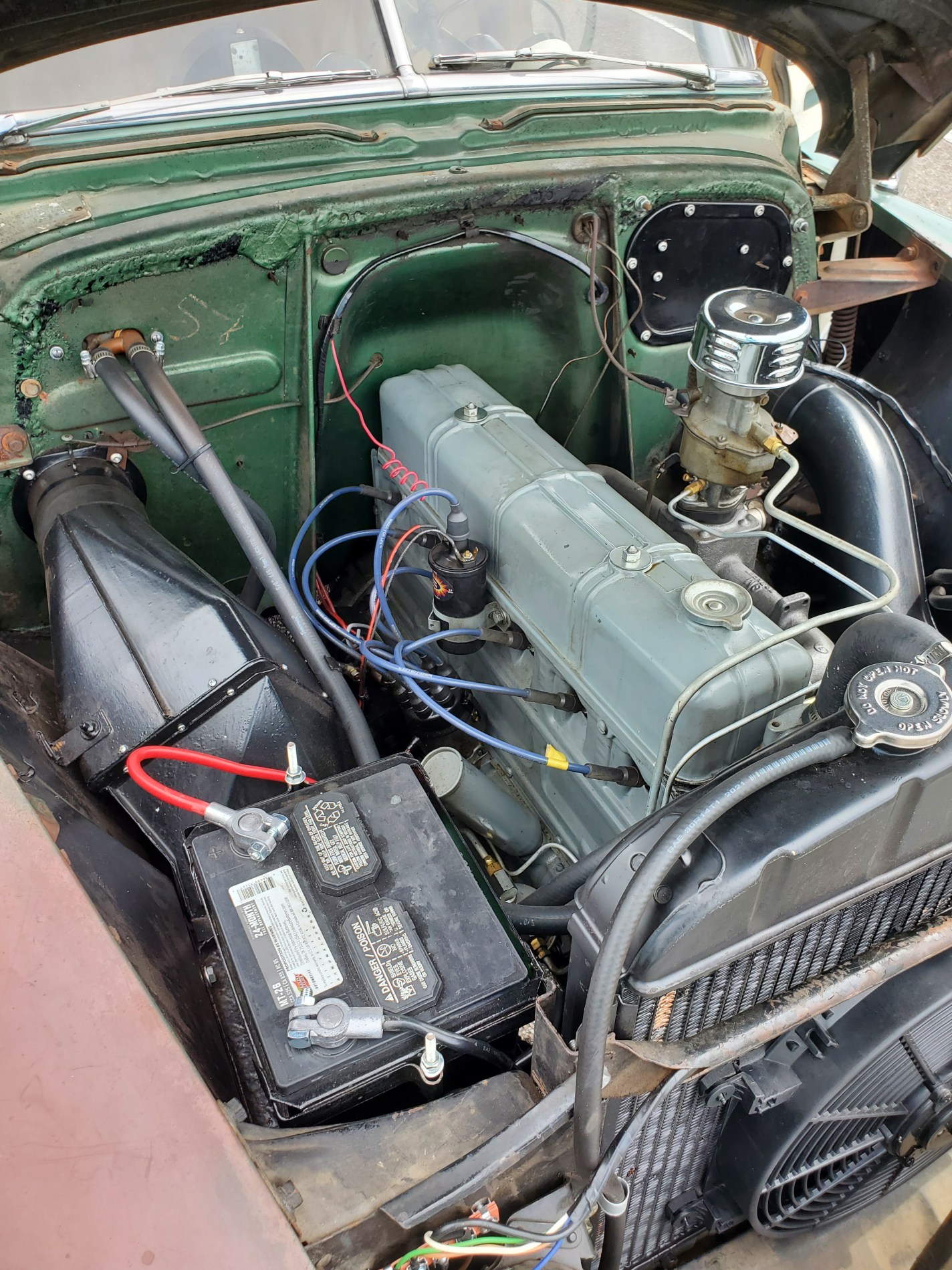
The Hippo has its original In-Line or Straight 6-cylinder 216 cubic inch engine. It has been fully rebuilt and is now better than it was when new, but it is still a 72-year-old design. When this car was built, one would routinely get the oil levels checked on their cars every two or three visits to the gas station. The engine blocks of the day were notorious leakers. The 216ci block has a metal plate affixed to its side with about 12 big, slotted screws. I discovered several of those screws were loose and used a right angle screw driver to snug them up. I also noticed some oil was leaking from under the fender washers atop the valve cover. I found a Lowes nearby and purchased some rubber O-rings to slip under the washers.
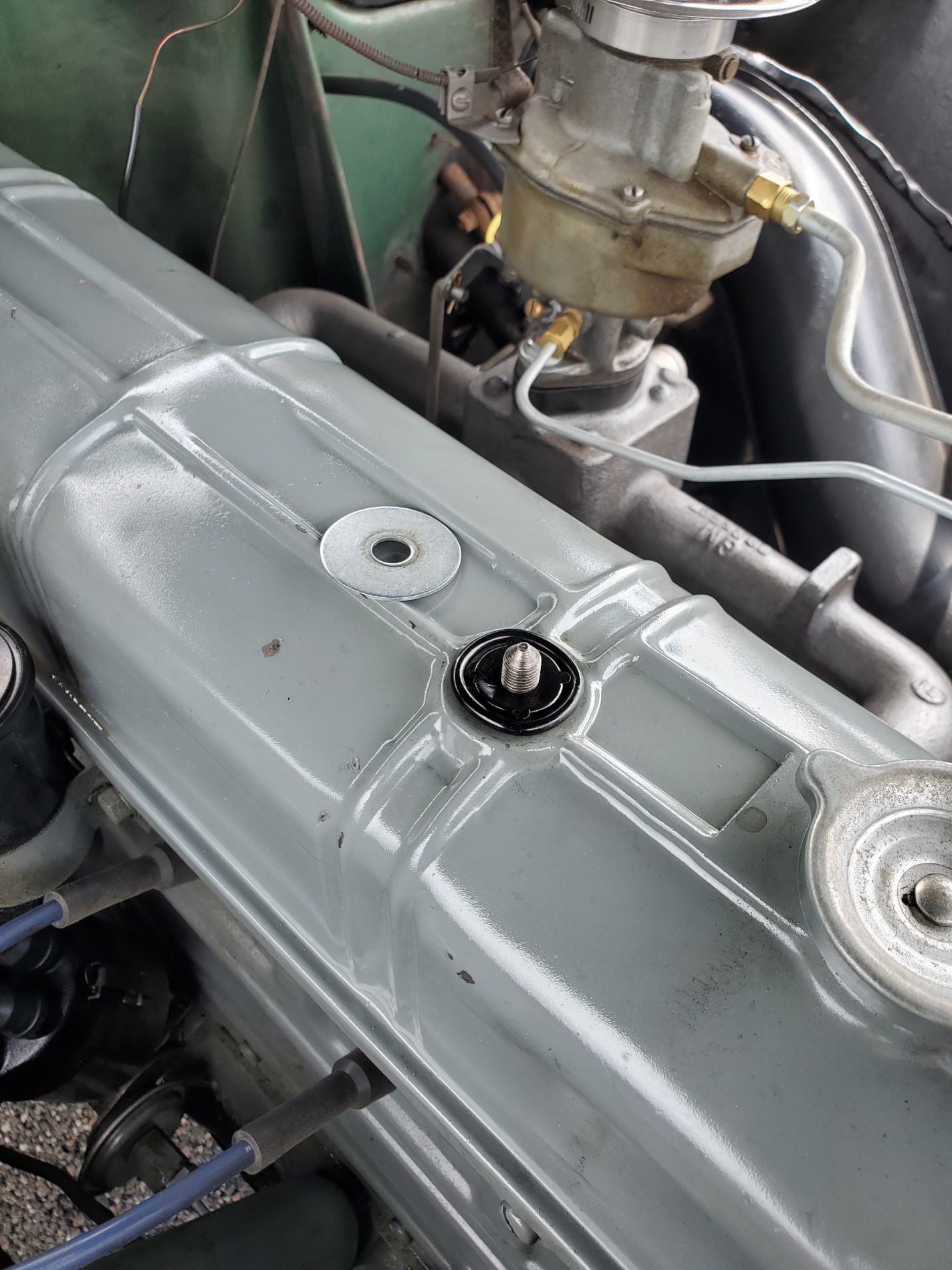
We will see tomorrow and the next day if the oil levels are holding.
Hal’s flight arrived on time, and after loading his gear in the wagon, we headed to the Renaissance Hotel and conference facility, which is in the midst of a huge golf/residence community in St. Augustine. As we pulled in, there were already 30-40 race cars in the lot.


There was even this 1918 chain driven model that was being repaired in the parking lot.
We arrived about 2 hours prior to our scheduled registration, so we decided to use the time to calibrate our speedometer. The Great Race crews had established an 11-mile course on both the southbound and northbound sides of Interstate 95. The idea was to run the southbound course at exactly 50 miles per hour, end-to-end without deviation from speed, and compare our time to the design time. The racers would then do the same on the northbound side and compare the two data points. To our surprise, we were only 2 seconds over design on both south and north sides, meaning our Timewise speedometer would need only minor adjustments. Hal calculated the adjustments per the speedometer manufacturers recommendations, and we ran both courses again. This time both runs were within 1/10th of a second of design. Not bad for a bunch of rookies!
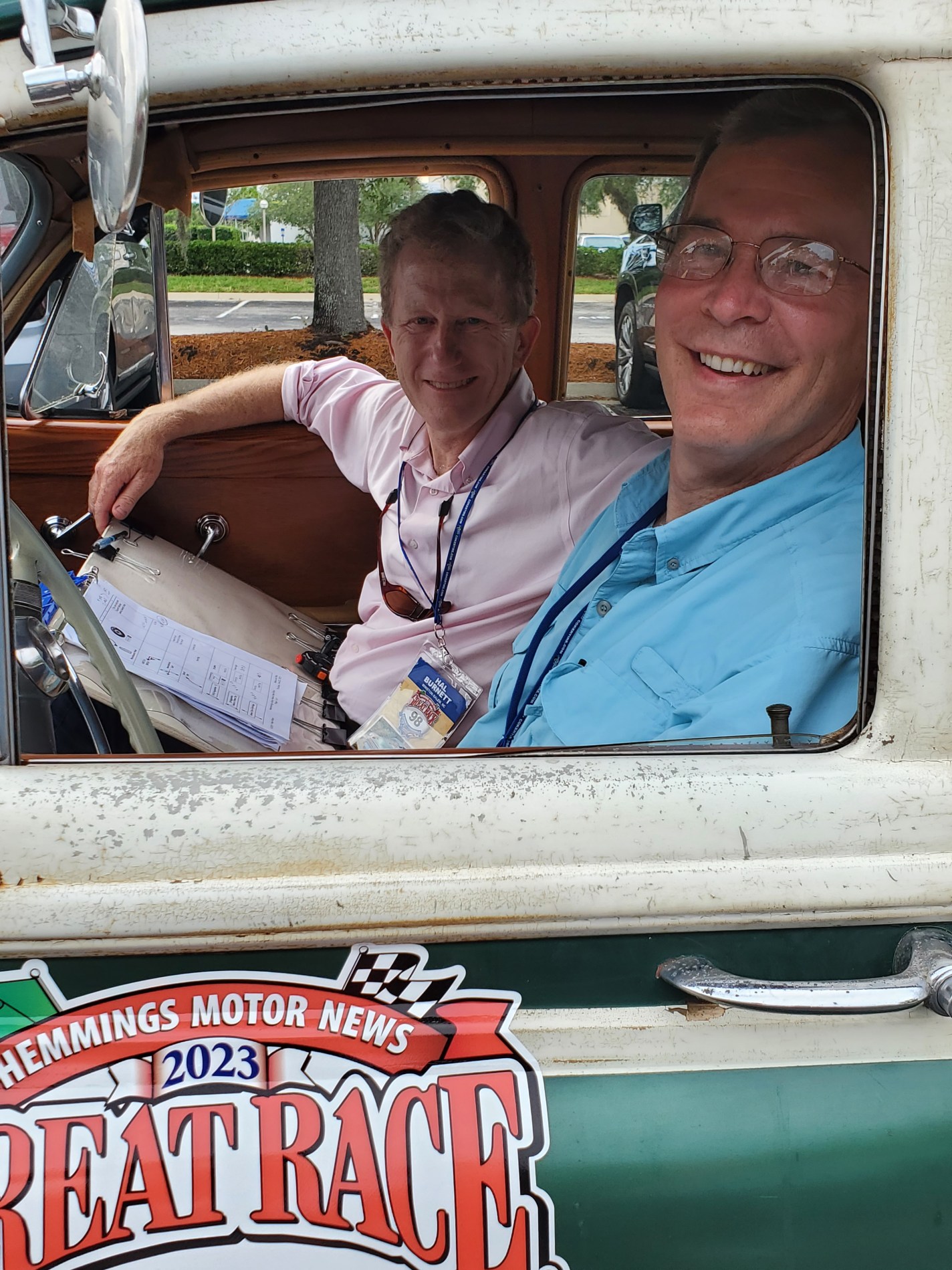
Driver and Navigator seen after completion of our speedometer calibration runs
We went through registration and then met with a husband/wife team who were race coaches. They were a huge help in answering a great number of questions for us. Unfortunately, the outcome of that discussion helped us to realize that we needed to re-establish all of our data points for race calculations.
We then went through our safety inspection and passed with flying colors. A bit earlier in the day we saw three early model motorcycles, each with suicide shifters (a term for motorcycles with a gearshift knob used with the rider’s hand instead of their foot. The rider would have to remove one hand from the handlebar to shift the gear, creating a dangerous situation of steering with only one hand). All three bikes were about to go through their safety inspections. Of significant note, these bikers were both the driver and their own navigators. Were it not bad enough that they have to take a hand off the steering to shift gears, these bikers are scrolling through race instructions and tracking time and speed while driving. CRAZY!
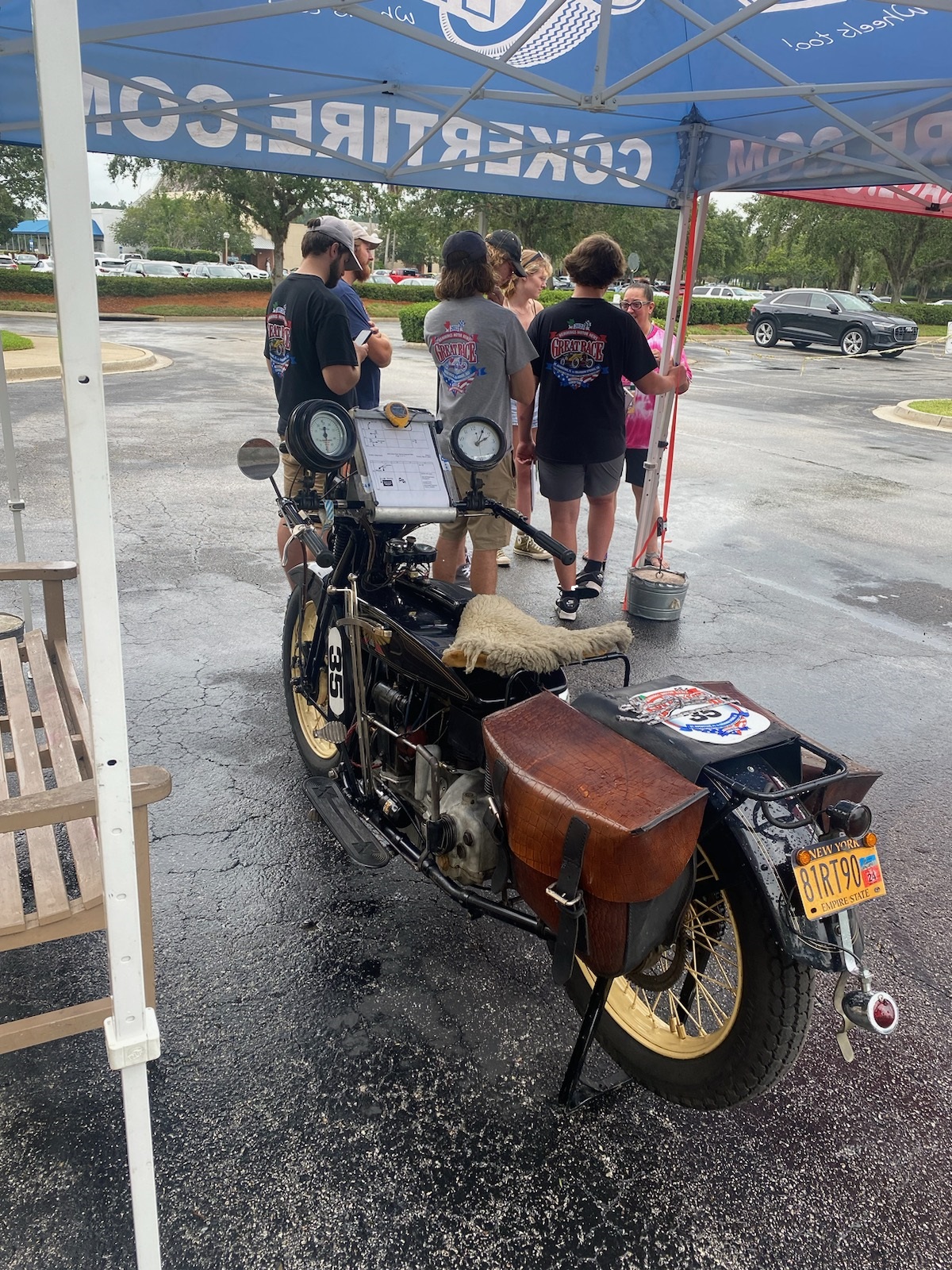
One of three Great Race antique motorcycles being prepped for its safety inspection
Regarding our bad stats – Weeks prior to the race, Hal flew to Baltimore, and we spent about 4 hours building out charts of data. We had Run, Acceleration, and Deceleration charts. Each chart would map out times traveling at 15, 20, 25, 30, 35, 40, 45, and 50 mph running a course. The Run chart would require passing the start and finish at the designated speeds. Then we would start from a dead stop and accelerate to the same 5mph increment speeds and run the course, and finally start the course at the designated range of speeds and slow to a stop at the end of the course. All of this data was critical to building the spreadsheet for Hal to use as navigator for the race. But our data was flawed, so on Father’s Day my older son Henry and I tried to run about 50% of those courses again, but even that information did not make sense with our prior run. Given the feedback of the race coaches, Hal and I decided to go through the entire process yet again, as we needed clean logical data for Hal to provide me with suitable instructions throughout the race.
We found a stretch of road within the sprawling golf community and ran our time trials until 10:20pm. As I write these notes, Hal is building his spreadsheets of data for our first sample race tomorrow morning.
As noted, this was a very loooooong day! Let’s see what tomorrow brings.
 I really have no sense for how this will go
Glad to hear you arrived safely and with some additional knowledge about the hippo to help you tweak, tune, and test ahead of the race.
LikeLiked by 1 person
Good luck today! I’m sending good vibes your way!
LikeLike
It was my understanding that there’d be no math 🙂
LikeLiked by 1 person
Great post! Slow and steady wins the race. Sounds like you are meeting and enjoying some real characters!
LikeLike
Congrats for making it to St. Augustine! Good luck!
Sent from my iPad
<
div dir=”ltr”>
<
blockquote type=”cite”>
LikeLiked by 1 person
Rooting for you gents!!! Continue on and May luck and a prayer be with you!
LikeLiked by 1 person
Willy – loved reading about the experience with the oil level. We really take that for granted now considering in the past the oil had to be checked so frequently. So impressed that your speedometer setting was so accurate. Looking forward to seeing how your new calculations turn out. And great to see that you and Hal are now together!
LikeLike